


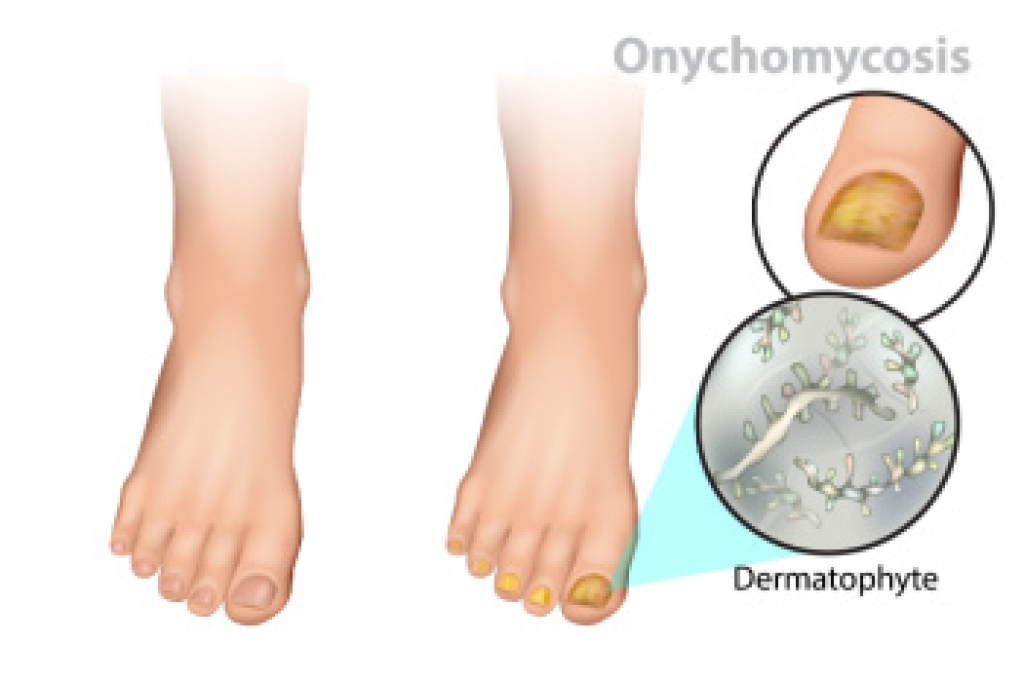
Toenail fungus is a common infection that affects the nail and surrounding skin, leading to discoloration and nail deformity. Subungual fungus develops beneath the nail, causing thickening, crumbling, and dark debris. White superficial fungus appears as white patches on the nail surface that may become rough and powdery. Candida infections affect the nail and surrounding tissue, often leading to swelling, redness, and separation of the nail. Symptoms can include brittleness, odor, and discomfort. Risk factors include warm moist environments, poor foot hygiene, diabetes, and a weakened immune system. A podiatrist can identify the type of infection, provide targeted treatments, such as topical or oral medications, and offer guidance on proper foot care to prevent recurrence. If you notice changes in your toenails, it is suggested that you consult a podiatrist for a diagnosis and treatment.
If left untreated, toenail fungus may spread to other toenails, skin, or even fingernails. If you suspect you have toenail fungus it is important to seek treatment right away. For more information about treatment, contact Dr. Larry Cohen of New York City. Our doctor can provide the care you need to keep you pain-free and on your feet.
Symptoms
- Warped or oddly shaped nails
- Yellowish nails
- Loose/separated nail
- Buildup of bits and pieces of nail fragments under the nail
- Brittle, broken, thickened nail
Treatment
If self-care strategies and over-the-counter medications does not help your fungus, your podiatrist may give you a prescription drug instead. Even if you find relief from your toenail fungus symptoms, you may experience a repeat infection in the future.
Prevention
In order to prevent getting toenail fungus in the future, you should always make sure to wash your feet with soap and water. After washing, it is important to dry your feet thoroughly especially in between the toes. When trimming your toenails, be sure to trim straight across instead of in a rounded shape. It is crucial not to cover up discolored nails with nail polish because that will prevent your nail from being able to “breathe”.
In some cases, surgical procedure may be needed to remove the toenail fungus. Consult with your podiatrist about the best treatment options for your case of toenail fungus.
If you have any questions please contact our offices located in Midtown, Manhattan New York, NY . We offer the newest diagnostic and treatment technologies for all your foot and ankle needs.